
Categoriestips & tricks
In tropical landscape design in Costa Rica, the look of natural lushness does not come from planting everything everywhere. It comes from intentional grouping, balance, and repetition. One of the most effective design principles we use at Vida Verde is the “Rule of Three” – not just as vertical layers, but as grouped plantings that form a complete tropical garden bed.
In Guanacaste, where plants grow quickly and the climate is intense, the Rule of Three helps prevent landscapes from feeling chaotic or overgrown. Instead of isolated plants scattered across a yard, this approach creates clear focal points that feel lush, cohesive, and purposeful. This is one of the key benefits of landscape design in tropical climates, where growth happens fast and structure matters.
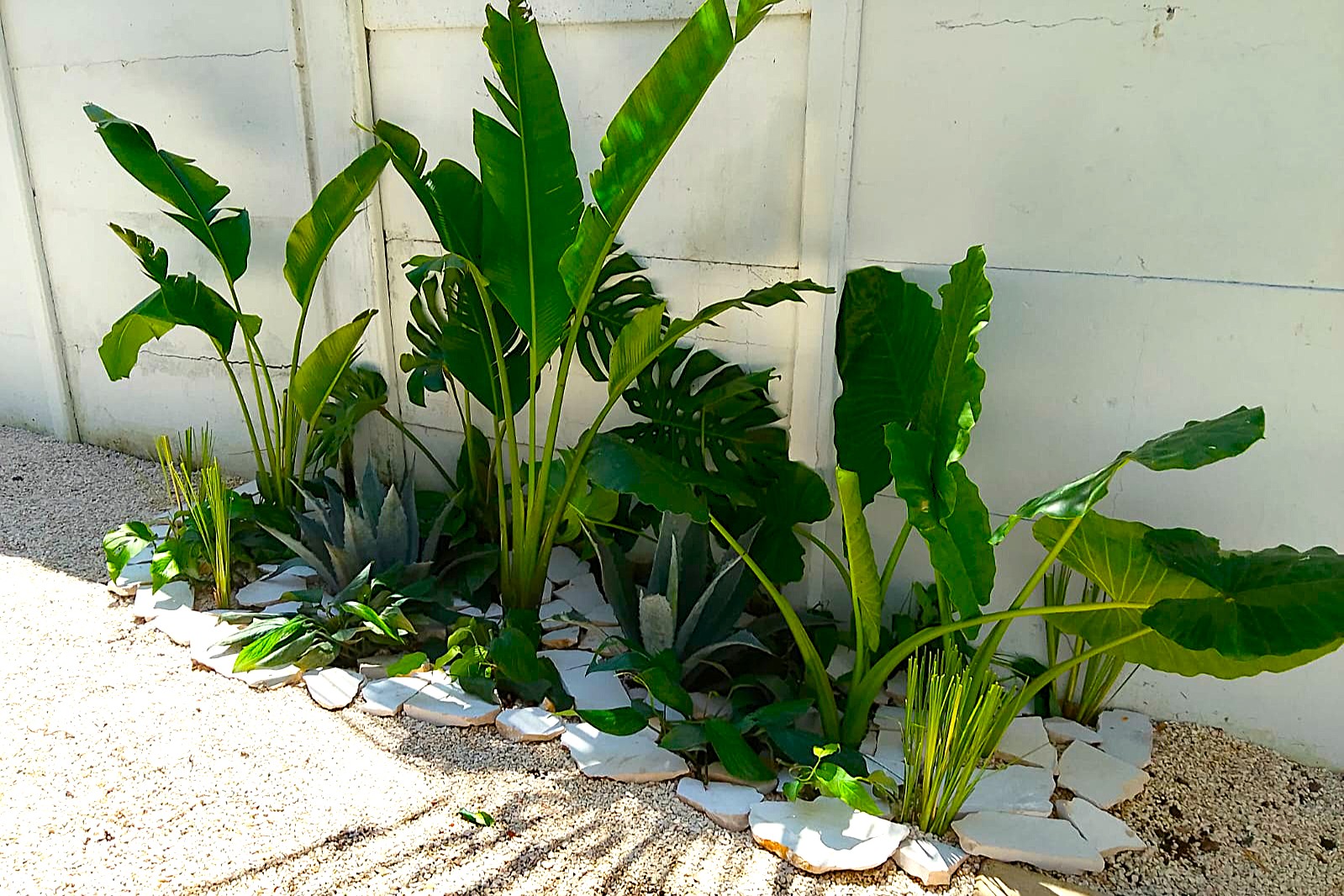 In gardening in Guanacaste, focal points are essential. The bright sun, lack of green turf, and open landscapes can make yards feel empty or unfinished without clear visual anchors.
A tropical garden bed built using the Rule of Three functions like a living sculpture. Each layer supports the others visually and environmentally, showcasing the true benefits of landscape design in tropical climates – balance, resilience, and long-term sustainability.
A classic Rule of Three grouping might look like this:
In gardening in Guanacaste, focal points are essential. The bright sun, lack of green turf, and open landscapes can make yards feel empty or unfinished without clear visual anchors.
A tropical garden bed built using the Rule of Three functions like a living sculpture. Each layer supports the others visually and environmentally, showcasing the true benefits of landscape design in tropical climates – balance, resilience, and long-term sustainability.
A classic Rule of Three grouping might look like this:
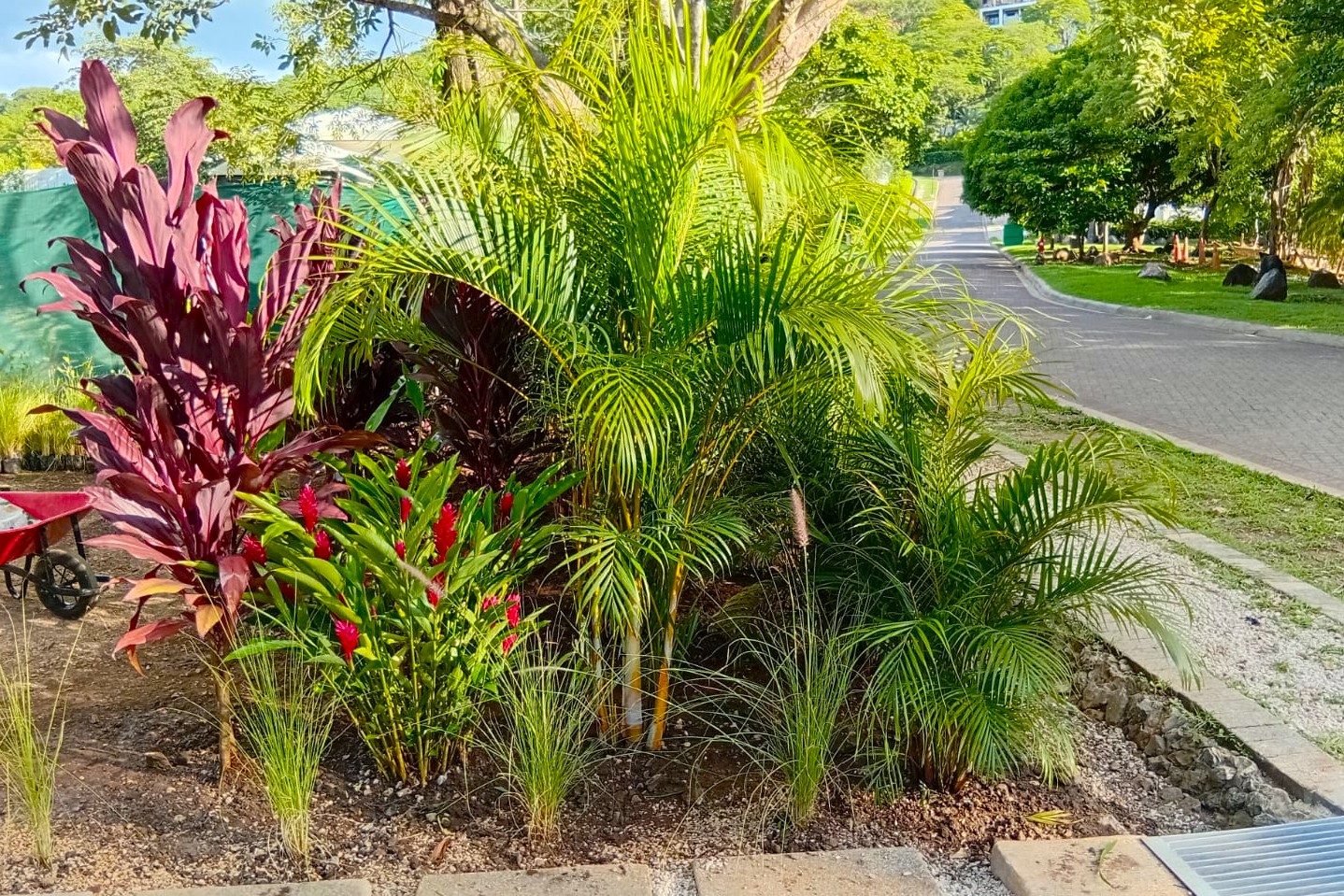 Mid-level plants are what give the tropical bed its fullness. In landscaping in Guanacaste, this layer should feel dense but controlled.
Bird of paradise and heliconias are ideal because they:
Mid-level plants are what give the tropical bed its fullness. In landscaping in Guanacaste, this layer should feel dense but controlled.
Bird of paradise and heliconias are ideal because they:
The Rule of Three – More Than Just Height
At its core, the Rule of Three organizes plants into three layers:- Top layer – the showstopper
- Mid-level plants – color, texture, and movement
- Ground cover – the finishing layer
Creating a Tropical Focal Point Using the Rule of Three
In gardening in Guanacaste, focal points are essential. The bright sun, lack of green turf, and open landscapes can make yards feel empty or unfinished without clear visual anchors.
A tropical garden bed built using the Rule of Three functions like a living sculpture. Each layer supports the others visually and environmentally, showcasing the true benefits of landscape design in tropical climates – balance, resilience, and long-term sustainability.
A classic Rule of Three grouping might look like this:
- One or more palms like a lipstick or cigar palm as the showstopper at the back or center
- Bird of paradise, heliconias, or gingers planted in front and around the palms
- Flowering ground cover like lantana or green striped zebra plant filling in the base
Top Layer – The Showstopper That Sets the Scene
Palms are the natural showstoppers in Guanacaste gardens. When used correctly, they act as the backdrop for an entire garden bed. In a Rule of Three grouping, palms are not planted randomly. They are placed deliberately to:- Frame entrances or walkways
- Anchor corners of a property
- Serve as the visual “back wall” of a tropical bed
Mid-Level Plants – Building the Body of the Garden Bed
Mid-level plants are what give the tropical bed its fullness. In landscaping in Guanacaste, this layer should feel dense but controlled.
Bird of paradise and heliconias are ideal because they:
- Add bold color and dramatic leaves
- Create movement with wind and growth
- Visually connect tall palms to low ground cover
Ground Cover – The Element That Ties Everything Together
Ground cover is what visually completes the tropical bed. Without it, even the best plant groupings can look unfinished. In Guanacaste gardens, ground cover like lantana and zebra plant provides:- A clean, finished edge to the garden bed
- Soil protection during heavy rains
- Color at eye level when viewed from patios and walkways
Why Grouping Benefits Landscaping Design in Guanacaste
Because plants grow so quickly here, ungrouped plantings can become messy fast. The Rule of Three grouping helps control growth visually, even as plants mature – another example of the benefits of landscape design in tropical climates. Grouping also:- Reduces the need for constant reshaping
- Makes maintenance more efficient
- Creates repeatable design patterns across a property
Repeating the Rule of Three Across the Property
One powerful technique in landscape design in Costa Rica is repetition. Once a Rule of Three grouping is established, it can be repeated in different areas using variations of the same plant types. This creates unity across the landscape while still allowing for creativity. Even large properties feel cohesive when the same design logic is repeated from entryways to pool areas to property borders.Vida Verde Tip – Designing Tropical Garden Beds That Last
When creating a Rule of Three tropical garden bed in Guanacaste, always design for how the grouping will look in two to three years, not just on planting day. A simple guideline we follow at Vida Verde is this:- Place the showstopper palm first and give it adequate space to mature
- Arrange mid-level plants in odd-number groupings around the palm to create a natural flow
- Use ground cover continuously, not in patches, so the entire bed reads as one cohesive element